.png)
Winter Car Care Tips for Canadian Winter: 15 Expert Strategies to Keep Your Vehicle Safe
Introduction: Why Canadian Winters Demand Extra Car Care
Canadian winters are no joke. From icy roads to bone-chilling temperatures, your car faces extreme challenges every day. Without proper preparation, you could find yourself stranded in the cold or dealing with expensive repairs. That’s why winter car care tips for Canadian winter aren’t just helpful—they’re essential.
This guide covers everything you need to know to protect your vehicle, from routine maintenance to emergency preparedness. Whether you’re a first-time driver in Canada or a seasoned winter warrior, these tips will help you stay safe, confident, and road-ready.

Understanding the Challenges of Canadian Winters
Extreme Temperatures and Engine Performance
In many parts of Canada, winter temperatures can dip below -30°C. Such cold conditions affect your car’s battery, oil viscosity, and overall engine performance. Cold starts put extra strain on your engine, so proper maintenance becomes a lifeline.
Snow, Ice, and Slippery Roads
Snow and ice create hazardous driving conditions. Black ice, in particular, is a silent danger that causes countless accidents every winter. Ensuring your car is equipped with the right tires and traction control features can be the difference between a safe commute and a roadside emergency.
Salt and Road Chemicals: Hidden Dangers
While road salt helps prevent accidents, it wreaks havoc on your vehicle’s undercarriage. Over time, it causes rust, corrosion, and brake line damage. Protective coatings and regular undercarriage washes are a must.
Essential Winter Car Maintenance Checklist
Battery Health: Preventing Cold-Weather Failures
Your car battery loses up to 50% of its capacity in freezing weather. Have it tested before winter begins, and replace it if it’s more than three years old. Carry jumper cables or a portable jump starter as backup.
Engine Oil and Fluids for Sub-Zero Temperatures
Switch to low-viscosity oil recommended for cold climates. Top up antifreeze, transmission fluid, and brake fluid, and use winter-grade windshield washer fluid that won’t freeze on contact.
Winter Tires vs. All-Season Tires
Winter tires are designed with softer rubber and deeper treads for maximum grip. In many Canadian provinces, winter tires are legally required during certain months. Don’t rely on all-season tires; they stiffen in cold weather and lose traction.
Checking Brakes Before the First Snowfall
Brakes are your first line of defense against slippery roads. Have them inspected for wear, and ensure the brake fluid is clean and at proper levels.
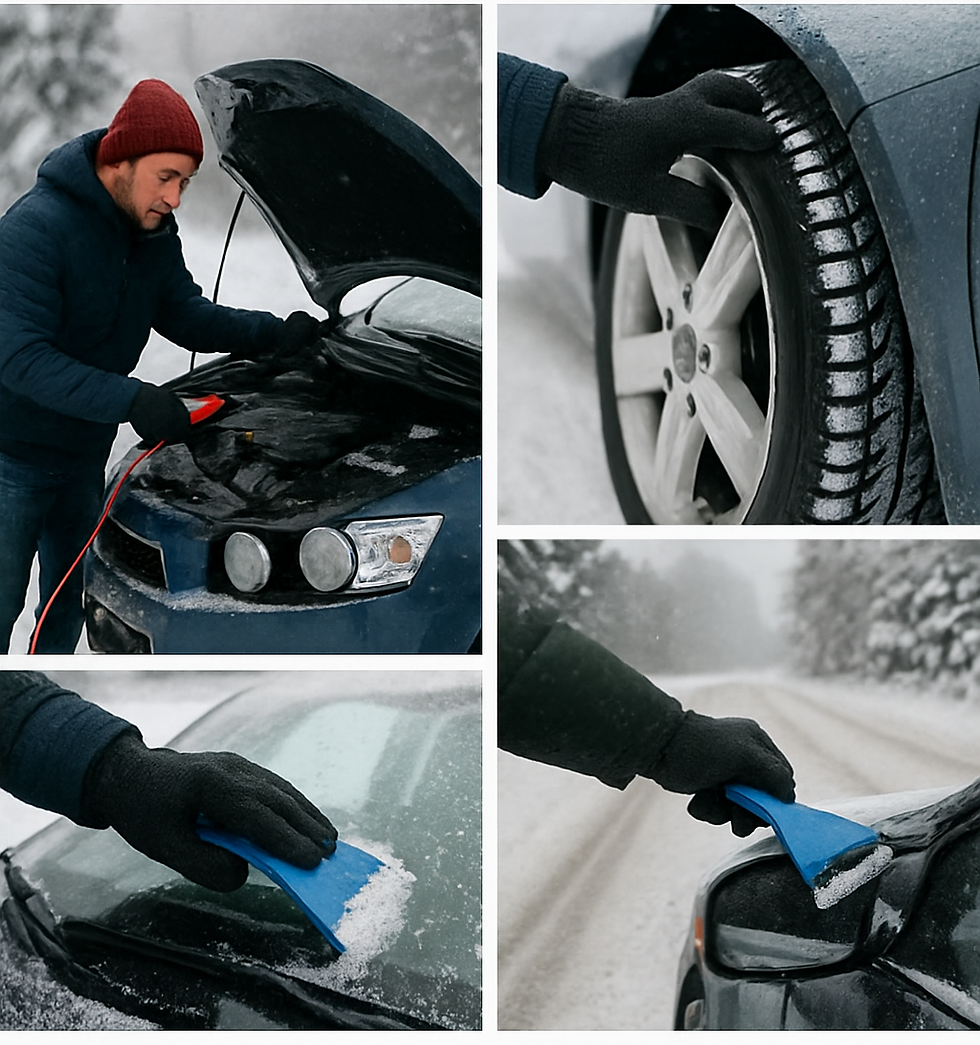
Preparing Your Vehicle’s Exterior for Winter
Windshield Wipers and Winter Washer Fluid
Swap out your wipers for heavy-duty winter blades. Pair them with washer fluid rated for -40°C to prevent frozen streaks that reduce visibility.
Protecting Car Paint from Salt and Corrosion
Apply a high-quality wax or ceramic coating before winter hits. Frequent washes, especially under the car, help reduce salt buildup that causes rust. Click here for more information on ceramic coating
Defroster and Heater Maintenance
Check your car’s heating system and defrosters to ensure clear windows and a comfortable cabin. A malfunctioning defroster can reduce visibility and increase accident risk.
Interior Comfort and Safety Preparations
Cabin Filters and Air Circulation
Replace cabin air filters to maintain good airflow and reduce fog buildup inside windows.
Winter Emergency Kit: Must-Have Items
Every Canadian driver should carry an emergency kit with:
A blanket and warm clothing
Non-perishable snacks and water
Flashlight with extra batteries
Sand or kitty litter for traction
Ice scraper and snow brush
First aid kit
Keeping Electronics and Sensors Reliable in Cold Weather
Cold weather can affect sensors like TPMS (Tire Pressure Monitoring System). Regularly check tire pressure and ensure sensors are free of ice and snow.
Driving Tips for a Safer Canadian Winter
Safe Driving Speeds on Icy Roads
Drive slower than usual—stopping distances can be 10 times longer on icy roads.
Maintaining Proper Following Distance
Keep at least a 6-second gap between you and the car ahead. This allows enough room for braking safely.
Handling Black Ice and Emergency Situations
If you hit black ice, don’t slam the brakes. Ease off the accelerator, steer gently, and allow the vehicle to regain traction.
Cost-Saving Hacks for Winter Car Care
DIY Maintenance vs. Professional Services
You can handle small tasks like checking tire pressure or topping fluids, but leave complex jobs—like brake inspections—to professionals.
Fuel Efficiency in Cold Weather
Cold weather reduces fuel economy. Keep your tires inflated and avoid excessive idling to save money on gas.
Long-Term Savings with Preventive Care
Investing in winter tires, rust-proofing, and regular maintenance might feel costly upfront, but it saves thousands in repairs and replacements down the line.

Frequently Asked Questions (FAQs)
Q1. Do I really need winter tires in Canada?
Yes, winter tires provide superior traction and safety. In provinces like Quebec, they’re legally required.
Q2. How often should I wash my car in winter?
At least once every two weeks, focusing on the undercarriage to remove salt buildup.
Q3. Should I warm up my car before driving?
Yes, but only for 2–3 minutes. Excessive idling wastes fuel and harms the engine.
Q4. What’s the best way to prevent my car from freezing overnight?
Park in a garage or use a block heater to keep the engine warm.
Q5. How do I know if my battery is winter-ready?
Have it tested at an auto shop. If it’s older than 3–4 years, consider replacing it.
Q6. Can I use regular windshield washer fluid in winter?No. Always use fluid rated for sub-zero temperatures to avoid freezing on the windshield.
Conclusion: Stay Safe, Save Money, and Drive Confidently This Winter
Canadian winters may be harsh, but with the right preparation, your car can handle them with ease. From routine maintenance to smart driving practices, these winter car care tips for Canadian winter will keep you safe and help your vehicle last longer. Remember: prevention is always cheaper than repair, and safety should always come first.
For more car care tips and resources, check out CAA Canada’s winter driving guide.

Comments